
The Hard Way

chess

In the past, the practice has emphasized the absolute: “awakening” or enlightenment as the raison d’etre of development.  This is a wonderful basis from which to proceed and I greatly appreciate the efforts the Ancestors made to clarify this fundamental aspect of the practice.  At the same time, as we practice in Lost Coin today, we can contribute to this tradition by addressing the integration of the absolute and the relative through the activity of endless learning.

This endless learning consists of becoming “objective” towards oneself and clearly seeing the cause and effect of our actions in our life.  It also consists of an ongoing  curiosity, openness  and learning about the relative: the world and ourselves. Much of this kind of learning is done with a teacher and is often the most difficult part for students.  Many students are very happy to sit and work through the koan system and yet be “snoring” on another level.  In my own desire to grow and learn, I have gone again and again to teachers and yes, it has been difficult, but I have always learned from my experience with them.

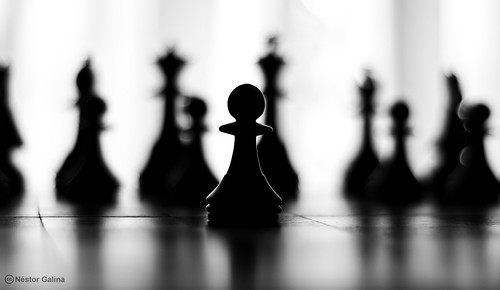
At present, I am lucky enough to be studying chess with International Master, world famous coach and distinguished author, Jeremy Silman.  In the process, we have also become friends.  I have learned so much when I can be open to both his criticisms and his affirmations.  An important thing I have learned is something he calls “the will to win” which I have sometimes lacked.

Looking into this aspect of my chess game, and myself, makes me dig deeply into what I really want, what I am really doing and how unconsciously and mechanically I can sometimes manifest.   Jeremy goes over my losing games and shows me my shortcomings.  On the other hand,  Jeremy has been very supportive of my endeavors, particularly my writing, and because I have a relationship with him which is not just a friendship but a teaching relationship, his affirmations are strongly empowering.

Putting oneself in this open and dangerous territory in which you empower another human being and trust them with your development is truly the hard practice, the hard way.

Creative Commons License photo credit: nestor galina

Tags: , , ,

6 Responses to “The Hard Way”

  1. Sean January 15, 2011 at 7:07 pm #

    I find that the goal of my spiritual practice is exactly what is outlined in the first paragraph. That is, integrating the absolute and the relative. This is where I find the challenge and art of spiritual practice. I appreciate the encouragement to learn on the relative side, since it validates the sort of relationship I work to sustain with life.

  2. Daniel Doen Silberberg January 16, 2011 at 11:02 am #

    @Sean

    Thank you for that comment. I feel very lucky to have students like you – that I am able to share a common ground with. You and those like you are the future of Lost Coin.

  3. Liz McCoy January 20, 2011 at 8:47 pm #

    Having Doen as my teahcer has opened my mind (at least a little but); having Doen as a teahcer has opened many doors (there are so many more); having Doen as a teacher has helped me live a life I want to live.

    I live each day (well most days)curious, excited to learn and full of gratitude.

    Thank you for being my teacher and my friend.

  4. Katie Wreford February 7, 2011 at 10:35 am #

    I was late reading this post, but I feel like I’ve been living it head on these past few weeks, maybe months. But never so intensely as now.

    Doen encouraged me, which is what I came to Lost Coin for I recall. But what I really wanted is to be taken to the source of any belief where I could feel myself worthy of this teaching. And just being there, willing to talk “real” to me has done a lot.

    I feel like I’ve got my life back. I may be a bit rusty, but I know how to drive. And Zen is my way. It’s the “how”, here and now, of the rest of my life. :)

  5. Amergin February 8, 2011 at 9:56 pm #

    I thought about it for quite some time before commenting, but I still come back to the contrary idea that “putting oneself in this open and dangerous territory in which you empower another human being and trust them with your development” is in fact the *easy* way – at least compared to the alternative of going it alone. Being new to doing so however, I must acknowledge up front that I have little experience of “this” to compare to “that”. Being rather cocky, I’ll plunge forward anyway (at least in describing “that” in which I have a great deal of experience).

    Pursuing a spiritual path on one’s own constantly presents the problem of having no means to check progress or development. One must advance slowly and cautiously, always on guard against self-deception and delusion (not to mention navigating through the potential of getting interminably caught up in blind leads/irrelevancies/dead ends). Eventually it becomes necessary to at least find *someone* who can provide a frank outside evaluation and (hopefully) confirmation that you have at least accomplished *something* “real”. As a Wiccan priest I spent 13 years before being satisfied/certain that I had accomplished what those who study with others should in three to five.

    In pursuing deeper understanding of reality (for lack of any less absurd way to phrase it) – trying to answer the “questions” that kept me awake at night since childhood and drove me to follow this path in the first place – this necessity becomes an imperative. (Bassui’s decades of dogged pursuit of the question, “Who is the Master?” strikes a deep chord with me. . .) Some things simply can’t even be addressed without guidance; hence I left koans alone and stuck to shikantaza, but even that requires navigational checks and corrections to avoid becoming an exercise in spiritual narcissism. (As it was my only experience in daisan, ever, I remember rather clearly Sensai, though you will not, that) when I mentioned past glimpses/brief experiences of understanding/insight at times in my life you told me to “forget about those – they will just become other attachments to hold you back.” Like the pink elephant which I never ever ever think about, I have if course promptly forgotten all about them ;-p to recognize that I really don’t know shit. *Knowing* that I don’t know shit likewise becomes an attachment.

    In short, as for hard or easy, it seems that in the pursuit of the beautifully ridiculous “goal” of enlightenment, eventually “putting oneself in this open and dangerous territory in which you empower another human being and trust them with your development” is the only way to actually accomplish anything (even, perhaps especially, if there’s nothing to accomplish) and “hard” or “easy” become meaningless. Without ongoing integration with the relative the pursuit itself is pointless – even if with that integration the pursuit itself is the only point of pursuing it – else it’s spiritual escapism and, as such, inherently self-defeating. I may well (probably)find it (a lot) harder than I expect, but I have no doubt that I’ll find it easier than doing nothing.

  6. Carole February 11, 2011 at 2:15 pm #

    That was a terrific interview. I was one of Daniel’s students in his Gurdjeiff group in Woodstock many years ago, and it brought back some wonderful memories, and also filled in a lot of his background with the group that I didn’t know. I also followed him to the Zen Mountain Monastery in Mt. Tremper where I lived for about 10 years. We lost touch with each other for a few years, and now I am one of his Zen students. Full circle you might say.

    Daniel is one of those people who are natural teachers. He seems to have the ability to see within a person, to see what they really need, even if they don’t see it themselves. And to point one gently in the direction they need to go.

    In this day and age when it seems anyone can hang up a shingle and call themselves a teacher of some sort, Daniel is the real deal. It was obvious 40 years ago when he didn’t consider himself a teacher (but those of us in his group knew he was one, and a good one at that), and it’s still true today. Thank you Daniel, for not retiring on some little island and spending the rest of your life fishing, but taking the difficult path for the benefit of us all.

Leave a Reply